
As we enter the third month of the war that remains ruthless and devastating, an engaging conversation with our CEO, Julien Daou, raises key concerns and offers a deeper perspective on the situation.
A more nuanced picture emerges, one that is not only about disruption but also about adaptation under pressure. With team members based in the region and firsthand accounts of ongoing instability, the reality is no longer distant. It is immediate, personal, and operational.
Within this context, the question becomes less about whether the industry is affected, and more about how it is reshaping itself in response.
INSIDE THE CONVERSATION: WORK, EMOTION, AND MARKET REALITY
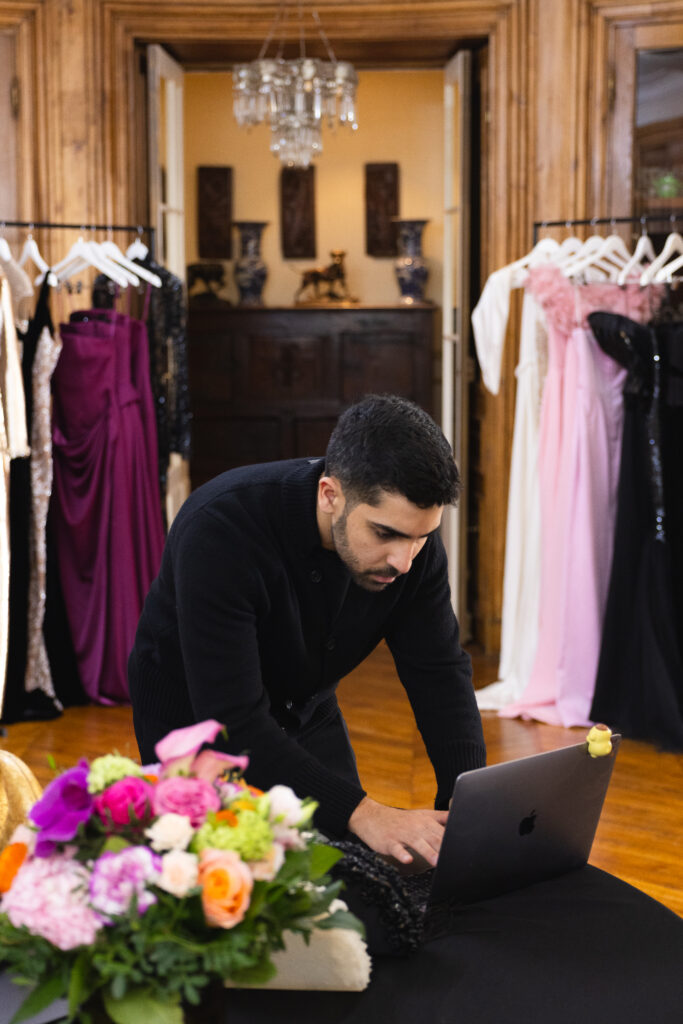
When reflecting on the emotional landscape behind creation, Julien describes a constant tension between pressure and focus.
“There is a constant mix of pressure and tension influenced by everything happening around us. It is not a light mental space. However, there is also focus and determination. The pressure does not stop the process — it shapes it.”
Beyond emotion, the industry is also confronting structural shifts. Two key challenges stand out: a slowing market environment and growing internal pressure between ambition and commercial reality.
Department stores and boutiques across several regions, particularly in the Middle East, are reducing order volumes and operating with tighter budgets due to uncertainty. At the same time, expectations within the industry have not adjusted at the same pace, creating a widening gap between creative ambition and market demand.
CONTINUITY UNDER PRESSURE
When asked whether it is still important to continue creating in such an environment, Julien is clear: continuity is not optional.
“Continuing to create is essential. Working in difficult times is not easy, especially when everything around you feels uncertain, but staying active is what keeps you ahead.”
In his view, leadership and creative direction naturally shift in moments of instability. The focus moves away from reacting to immediate conditions and toward preparing for what comes next.
“Eventually, it becomes less about reacting to the moment and more about preparing for what comes after. It is about maintaining consistency, discipline, and vision, even when the environment is unstable.”
KEY Fashion & LUXURY INDUSTRY IMPACTS
1. Supply Chain Disruptions
Shipping delays and logistical instability continue to affect timing and delivery precision, forcing brands and partners to constantly recalibrate operational planning.
2. Media and Marketing Sensitivity
Brands are increasingly navigating uncertainty in communication. In a climate shaped by global sensitivity, knowing what to say and when to say it has become a strategic challenge, with many hesitating over tone, timing, and engagement.
Campaigns that once relied on aspiration and emotion are now being carefully reassessed through the lens of responsibility. Engagement strategies must now account not only for audience attention, but also for timing, tone, and geopolitical awareness.
3. From Physical to Digital: A Shift in Showroom Culture
The disruption has also accelerated an existing shift: the move toward digital-first engagement.
With travel restrictions and safety concerns limiting attendance at events such as Paris Fashion Week, traditional showroom formats have been forced to evolve. In response, many brands have transitioned appointments and presentations into fully digital environments.
4. Adapting Operations Under Uncertainty
Studios and internal teams are adapting to unstable conditions by restructuring workflows, prioritising flexibility, and maintaining continuity despite external pressure. Across the industry, adaptability has become a core operational requirement rather than a reactive measure.
HOLDING PERSPECTIVE: WHY HOPE STILL MATTERS
Despite the challenges, there remains a shared belief in cyclical recovery.
Downturns, while difficult, are not permanent. The industry has historically moved through cycles of disruption and renewal. What remains constant is the expectation of recovery, and the necessity of continuing to move through uncertainty rather than pausing because of it.
As our CEO, concludes:
“Even in the most uncertain moments, you cannot stop building. What you continue to create today becomes your strength tomorrow. Difficult periods do not end progress; they redefine it.”